

Feb 3, 2026, 9:00 AM
Generosity Report 2026 – valuable insights for churches and Christian charities
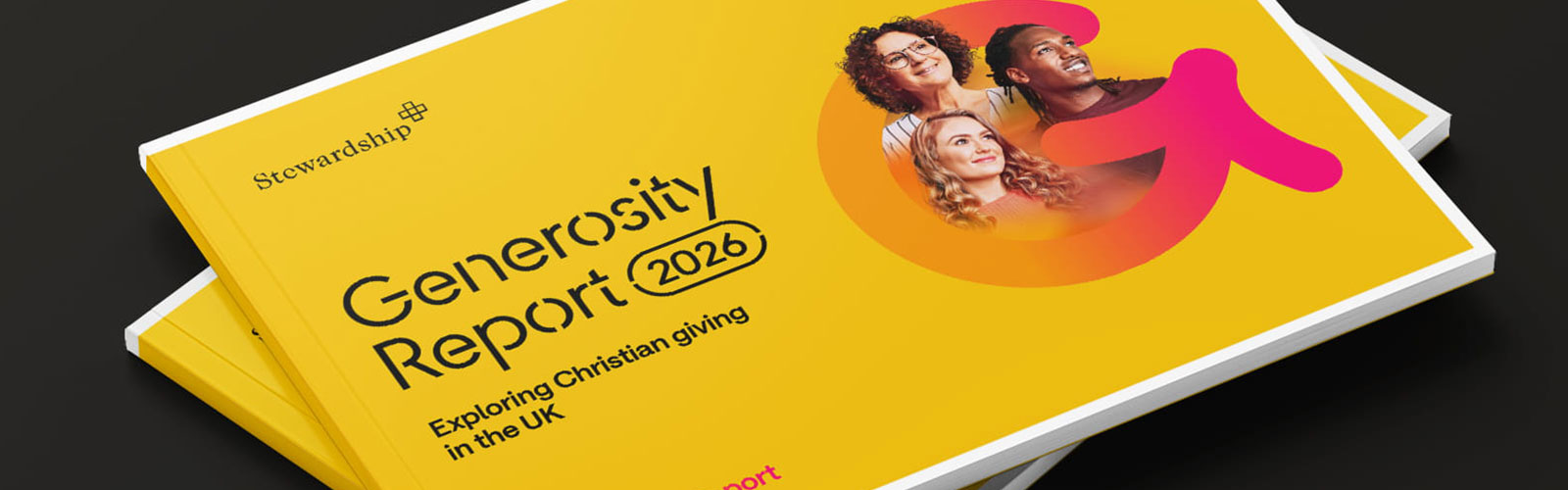
Stewardship launched its Generosity Report 2026 at the end of January. Action Planning CEO Sean Tully attended the launch in London and offers some reflections here.
This is the third successive Generosity Report, and the launch event drew a large crowd of church and charity leaders and fundraisers to hear a mix of presentations, panel discussions and round tables. I won’t regurgitate all the findings here – you can read the report for that! Instead I’ll say a few words about what it might mean for churches and Christian charities in their stewardship and fundraising.
Sense of connection
The main headlines will have resonance for many of us who have worked in the fundraising sector for any period of time: donor generosity correlates with the donor’s sense of connection to/engagement with your cause (or church), and their levels of trust. It’s what church and charity leaders know implicitly by experience and what the Generosity Reports have made explicit over the past three years.
The research is based on consultation with 6,000 Christians, segmented by the authors into four groups: cultural, church-going, practising and committed. Committed Christians exhibit the highest ‘engagement’ and the greatest financial generosity – on average four-and a-half times that of the Great British public. Even the ‘least engaged’ group (cultural Christians) give more than the mean average donation of the general public. So far, so unsurprising.
Key to growth
The key question for church leaders and charity fundraisers is not so much where to find these generous Christians (simply find a church!) or how to connect with them, but rather how to grow them. Here the report, and the conversations prompted by it, have crucial insights.
In summary, “Trust… leads to greater generosity; regular teaching (in the church setting) on generosity builds trust; trust leads to gratitude and joy in giving.”
If Trust is the key word, Christian discipleship is the context.
Trust has long been recognised as an important context for fundraising. Secular research by the Charity Commission reports that trust in UK charities remains high since 2020, with charities more highly ranked compared to other organisations, and only doctors outperforming them. Unsurprisingly, donations reaching the end cause and the purpose of the charity being achieved are the most important factors in whether the public trust charities, and whether they support a particular charity or not.
Foundations of trust
In the words of Andrew Hawkins, author of the Generosity Report: “Trust is the primary currency in giving”. I’d argue that trust sits on twin foundations of competence and credibility. These twin foundations combine to build trust.
For churches and charities at the practical level, there are serious questions about good governance, robust financial management, employment practice and communication (of both missional impact and of stewardship) – factors that demonstrate competence. Action Planning can help you improve any or all of these areas (https://actionplanning.co.uk/services).
As for credibility, churches in particular are surely judged on their core mission: that of making disciples. Action Planning won’t presume to teach church leaders about disciple-making, so instead I’ll amplify the words on that subject of event speaker Tom Lawrence, project lead for Stewardship’s Generous UK Church initiative: “If churches avoid teaching about generosity, they are leaving a gaping hole in their discipleship.”
Whole-life discipleship surely incorporates a range of facets, including worship, prayer, studying scripture and, extending Lawrence’s point, generosity of finances (Treasure), Talents (experience and skills) and Time (Angie Campbell shared during round-table discussion that they encourage these “three-Ts” at the church she leads with her husband in Cambridge, 3C Church).
Giving personas
What does the Generosity Report 2026 mean for church leaders? Your congregation will be more generous within a context of trust. Trust grows with discipleship. Discipled Christians are more committed. Committed Christians are more financially generous.
The Generous UK Church project promises to offer resources to help church leaders build trust and teach regularly on generosity, resulting in more gratitude and joy in giving.
What does it mean for charity leaders and fundraisers? My take-home for you is that discipleship extends beyond church; that we should not leave all the discipleship-making to church leaders on a Sunday. The Generosity Report highlights five giving personas from its research: givers driven by impact (a desire to make the greatest possible difference), by relationship (a desire for connection), by theology (giving is a joyful act of worship) and by two stages of life: youth and older age.
Charities have as much right, opportunity and – arguably – responsibility to encourage discipleship in their supporters, donors and stakeholders across this range of motivations, mindful that no one fits perfectly in a single box.
This does not negate the importance of demonstrating your charity’s competence as described above. And equally it offers charities the opportunity to demonstrate their credibility to donors, some of whom are not being wholly discipled by their churches and who may be crying out for whole-life discipleship.
How can you structure your communication of impact, your opportunities for relationship and connection, your outworking of theology and your reach to both older and younger generations in such a way that it builds trust, first in God, and second in your brand enabling and celebrating gratitude and joy in giving?
Challenges and encouragement
The report does not shy away from the very real challenges facing charities and churches: an overall reduction in reported average giving compared with the previous years’ research; still a significant “Giving Gap” (see report page 8); and (possibly “the canary in the coalmine?”) a finding that fewer Christians gave in response to directed fundraising appeals from charities or churches (down by 11% on 2025).
And yet, there is also much to be encouraged by. Notably, whilst most Christians expect their giving habits to remain steady in the next 12 months, those on higher incomes, young people and those from ethnic minority backgrounds expect to increase their giving in the same period. Following Lucy Peppiatt’s opening reflections at the launch of the report, setting the scene by reminding us that generosity is Theology, Elim Executive Director Olivia Amartey reflected on her own experiences growing up in a Black majority church setting: “I learned that you cannot think about serving without also giving.”
And in parallel with the Bible Society’s recent report The Quiet Revival, young people in particular are much more open (might even expect) to hear teaching about generosity – whether from the pulpit, social media or other channels – and to talk with their peers about generosity. This same generation, who we hear are pessimistic about the future and expect to be less well off than previous generations, show themselves to be enthused about generosity.
Once again, Stewardship’s Generosity Report lifts the lid on a subject that, for too long, churches have been all too shy about. Crucially, three years of reports is not simply a critique of the state of Christian generosity, the report is full of prompts and calls to action for church and charity leaders, and has already led to further work via the Generous UK Church Project.
At Action Planning we are hopeful of hearing more analysis and updates on the research at Faith and Fundraising 2026, which we are delighted to deliver again this October with Yeomans, in partnership with Stewardship, FICO and Mission Increase.
ABOUT SEAN TULLY

Sean Tully is CEO of Action Planning, having taken over from founder David Saint at the end of 2024. Since 2002 he has worked successfully with the UK voluntary and not-for-profit sector, helping organisations to strategically plan for and pursue income from Trusts and Foundations, Lottery and Statutory sources. He first joined Action Planning in 2016 as an Associate Consultant.

Capital Appeals & Fundraising
Approach big challenges methodically. Capital appeals and fundraising campaigns to raise large, specific sums of money are not part of the everyday experience of most not-for-profit organisations and so they can be daunting. We provide the level of experienced support you need, whether that is light touch mentoring and advice, detailed planning, or management of the entire appeal.
Get in touch
Do you want to hear more about our Capital Appeals and Fundraising services? Leave your details below and we'll be in touch.